Giving Software Systems (Artificial) Intelligence
Classic software systems are deterministic. AI systems follow different rules: they are data-driven, probabilistic, and require entirely new infrastructure components such as feature stores or vector databases.
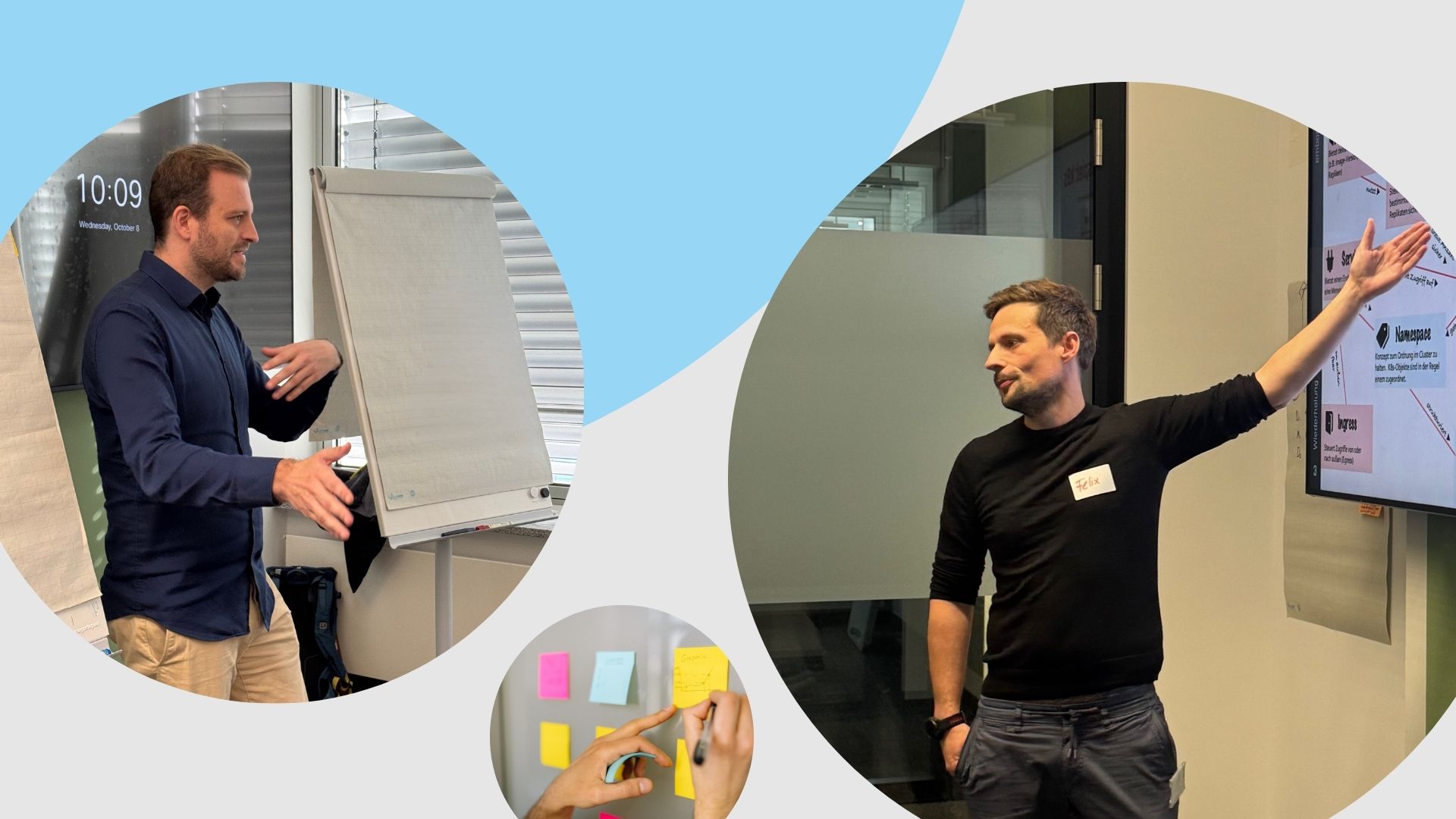 In this seminar, we close the gap between classic software architecture and modern AI engineering. We show you not just how to use models, but how to design the system around them to be robust, testable and maintainable.
Agenda
Quality attributes and architectural differences
ML Infrastructure
Data engineering, feature stores and model selection
Context Engineering
Systematic approaches for prompting and context management
RAG Architectures (Retrieval Augmented Generation)
Connecting LLMs with your own company data
Evaluation & Testing
Metrics and tools to automatically ensure the quality of AI outputs
Patterns
Common integration patterns for LLMs and classic ML models
Agentic Workflows
Architecture patterns for systems that use tools and make decisions
Multi-Agent Systems
Orchestrating multiple specialized AI agents
Your Benefit
In our hands-on training “Designing Software Architectures for AI Systems (SWARC4AI)”, participants learn to assess, beyond the hype, which components are genuinely necessary for their specific use case, gaining confidence in critical technology decisions. You learn how to bridge the gap between first experiments and long-lived, “production-ready” AI systems. The seminar also conveys the understanding needed for the architecture of autonomous agent systems, so you can deploy them in a future-proof and targeted way in your own context.
Target Audience
The training is aimed at software architects and developers facing the challenge of integrating AI components such as LLMs or ML models into existing systems while ensuring scalability and security. It equally addresses senior developers and tech leads who want to take the step from pure coding to holistic system design, and understand how AI systems are successfully operated in production. ML engineers with architectural ambitions also learn here how to extend their expertise in model training to build robust applications around the AI core.
iSAQB® Accredited
In our seminar, we implement the learning goals of the iSAQB® curriculum SWARC4AI in a modern, hands-on and interactive way. On your way to becoming a Certified Professional for Software Architecture (CPSA) Advanced, you receive 20 technical and 10 methodological Credit Points.
Our Extras for You
All exercise results and theoretical content shown are made available to participants electronically afterwards
Official Certificate of Participation
In this seminar, participants are awarded 20 technical and 10 methodological Credit Points for the iSAQB® CPSA-Advanced Level with a perpetually valid iSAQB® certificate.
Additionally...
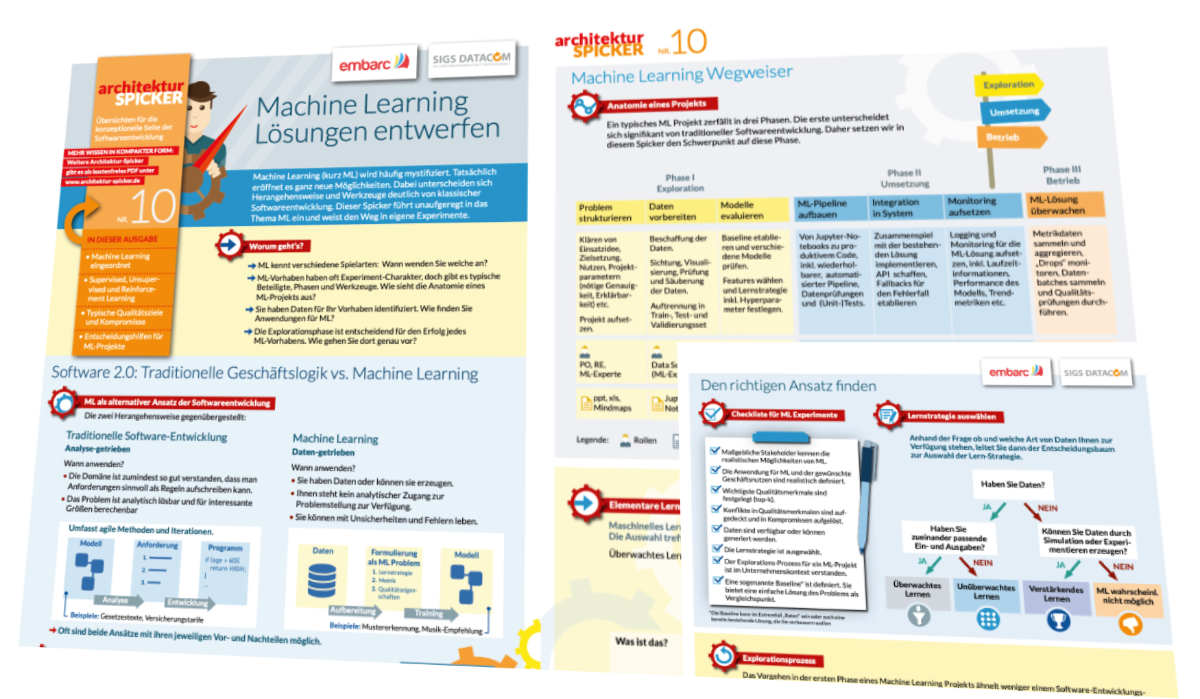
You’ll find a quick, practical overview of Machine Learning in our architecture cheat sheet no. 10 Machine Learning Lösungen entwerfen (German)