
Systematically and Sustainably Modernizing Software Architectures
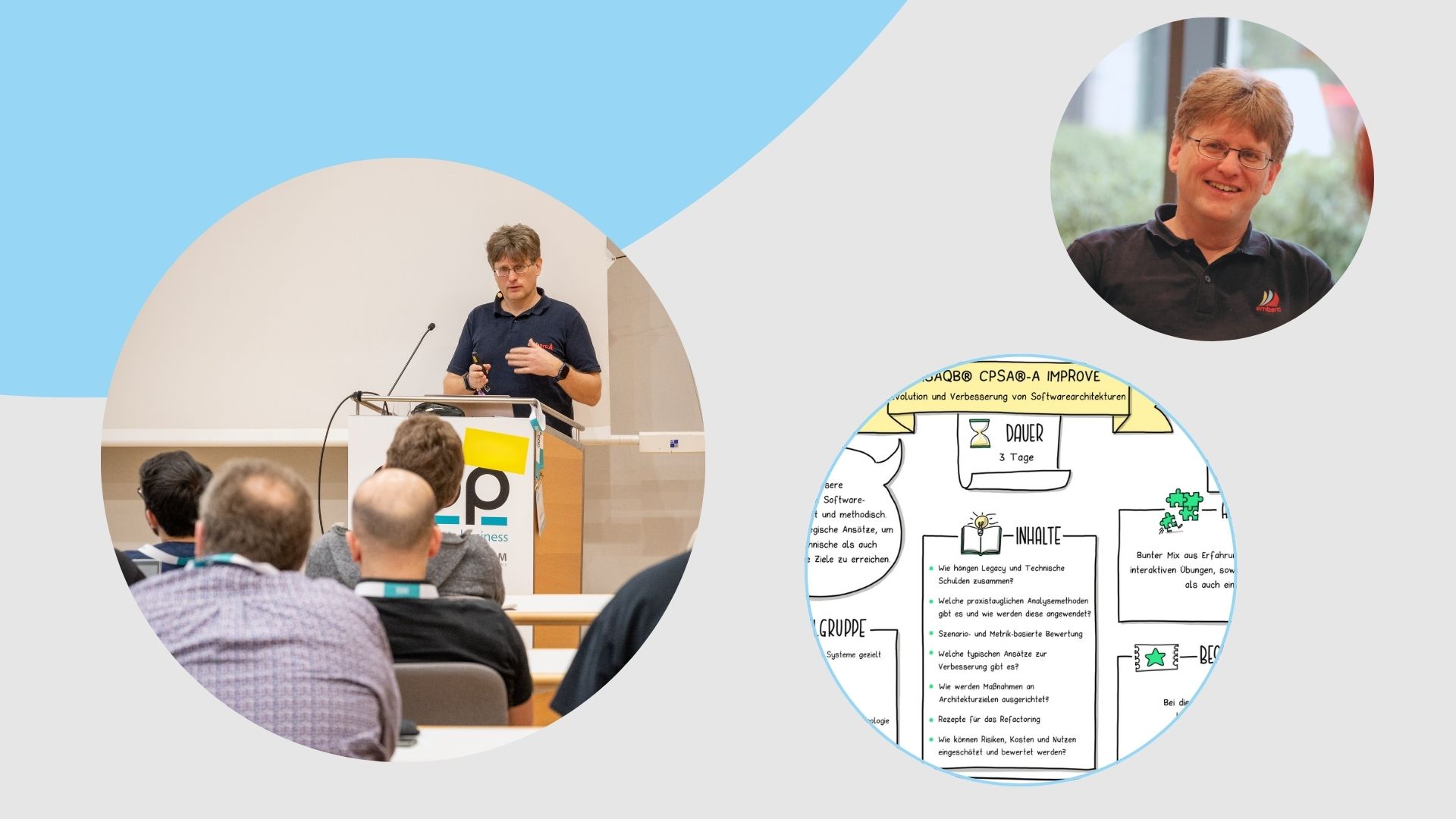 In this workshop, we deal with analyzing the existing software architecture, identifying solution approaches, and planning and implementing improvement measures.
Agenda
Legacy and technical debt
Typical Practices and Methods
Knowing and applying practical analysis methods
Evaluation
Scenario- and metric-based assessment
Approach
Typical approaches to improvement
Focusing
Aligning measures with architecture goals
Structural Improvement
Recipes for refactoring
Estimating and Assessing Problems and Solution Approaches
Assessing risks, costs and benefits
Modern Approaches
Fitness functions and evolutionary architecture
Your Benefit
As part of this workshop, participants get to know well-founded analysis and improvement methods for their software architecture. In many hands-on exercises, participants work out much of the content themselves and reflect on what they’ve learned together with the workshop leader.
Target Audience
This workshop is aimed at software developers and architects who want to specifically improve existing systems. You already have practical experience in software architecture and development. Knowledge of a specific technology or programming language is not required.
iSAQB Accredited
In our seminar, we implement the learning goals of the iSAQB curriculum IMPROVE in a modern, hands-on and interactive way. On your way to becoming a Certified Professional for Software Architecture (CPSA) Advanced, you receive 10 technical and 20 methodological Credit Points.
Our Extras for You
All exercise results and theoretical content shown are made available to participants electronically afterwards
Official Certificate of Participation
In this seminar, participants are awarded 20 methodological and 10 technical Credit Points for the iSAQB® CPSA-Advanced Level with a perpetually valid iSAQB® certificate.
Additionally...
Practical transfer - we work with a continuous case study, or, by prior agreement, happily with examples from your own projects too. This way, you get to know different approaches to improving your software architecture.